
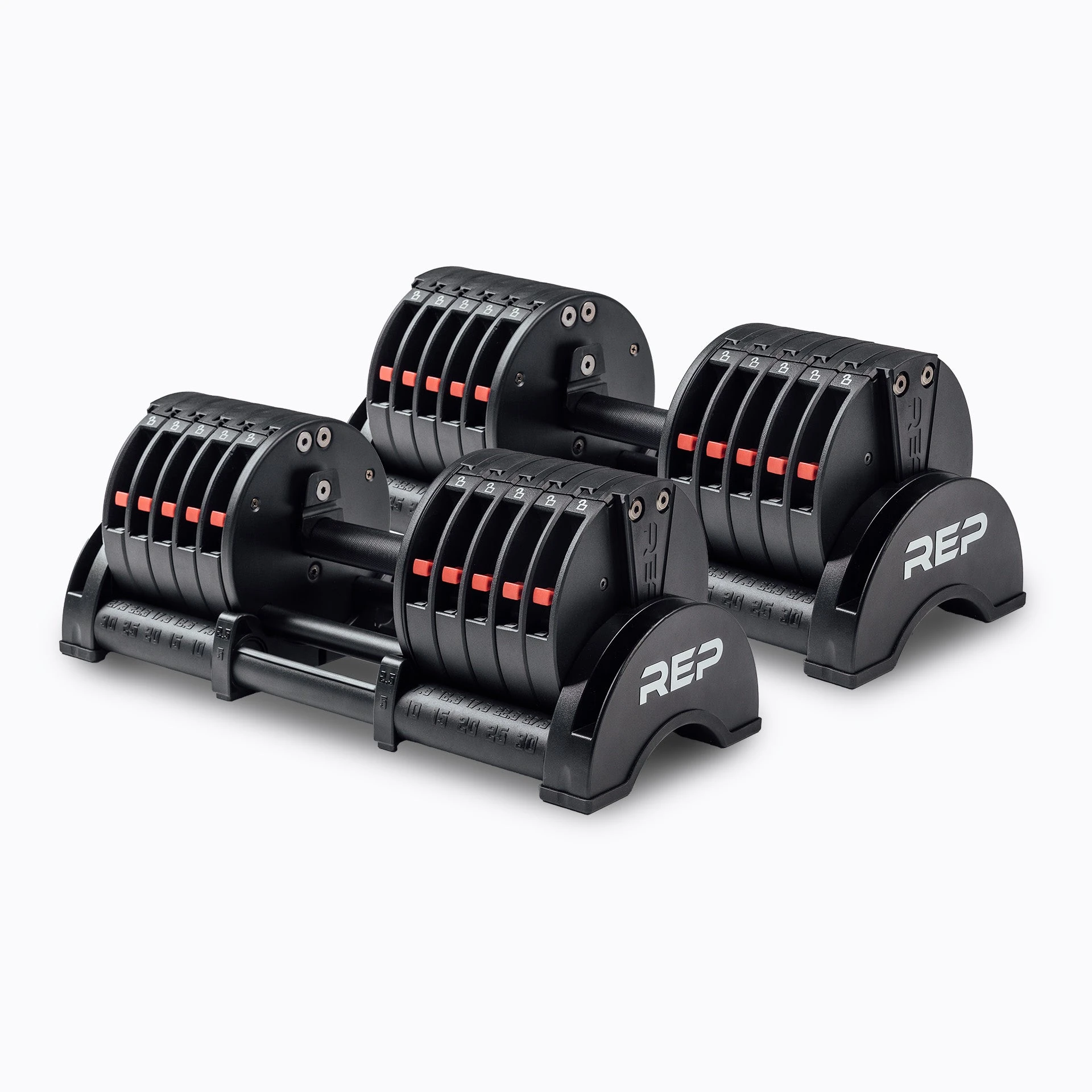
Your needs, this model
Does it fit your priorities?
Can I reach sixty-six pounds per hand with switches and balanced gaps no greater than six pounds?
Yes. The nominal thirty-kilogram endpoint is about 66.14 pounds, with balanced 2.5 kg steps of about 5.51 pounds.
Explore this need in the finder →Is a native thirty-kilogram balanced setting supplied in the documented final stage?
Yes. Thirty kilograms is the maker’s named metric endpoint and is included in this package.
Explore this need in the finder →Can this supplied package reach an exact seventy-pound setting?
No. Its nominal maximum is thirty kilograms, about 66.14 pounds, and its native settings are in kilograms.
Explore this need in the finder →The 30 kg QuickDraw pair supplies the full documented metric capacity of the family. It is the relevant version when you need more than 25 kg per hand now and want to retain the same low nominal starting selection. It also brings the longest loaded QuickDraw body, so the decision is about capacity, working clearance and adjustment routine together.
The metric endpoint is heavier than the pound endpoint
REP lists a nominal 2.5–30 kg range for each dumbbell. Thirty kilograms is approximately 66.1 pounds, meaning this package is not simply another label for the 60-pound pair. The manufacturer says the kilogram plates contain additional material while keeping the same compact external dimensions. Choose the metric version for its metric weight selections and capacity.
The low end is different too. A nominal 2.5 kg start is approximately 5.5 pounds, so it should not be treated as an exact five-pound setting. A buyer following a pound-based program may prefer the pound version even if its maximum is lower. A buyer following kilogram targets can avoid continual conversions by staying with the metric ladder.
This is the maker's named 30 kg QuickDraw endpoint. Do not choose it expecting another QuickDraw stage above that capacity. If your present requirements already exceed 30 kg, a higher-capacity system is the more useful comparison than a promised future upgrade that is not documented.
Two adjustment routines within one dumbbell
The steel switches secure the outer plates. Matched changes at the ends produce the larger 5 kg moves, while the two internal 1.25 kg plates provide the balanced 2.5 kg steps. This lets the pair cover a broad range, but a setting that needs the internal plates involves more than flipping the outer switches.
REP also allows one internal micro plate for a smaller 1.25 kg addition, acknowledging slight imbalance. Treat that as a separate loading arrangement. If matching end loads are essential, use the balanced 2.5 kg progression as your purchasing criterion. A 1.25 kg micro plate does not by itself establish a uniform balanced 1.25 kg range.
The visible controls are a useful ownership feature for someone who likes checking the mechanism directly. The QuickDraw instructions require the plates through the chosen weight to be locked when increasing the selection, and the selected and micro weights to be secured before use. At the full stage, develop a consistent return and selection routine rather than hurrying through the extra switches.
Check the longest loaded configuration
REP lists the 30 kg dumbbell at 18.5 inches long. That length can affect how closely two dumbbells come together and how the ends move around a bench or torso. If your heaviest current exercise stays at 25 kg, the 25 kg package is listed at 16.4 inches at its supplied maximum. The extra capacity has a tangible size tradeoff while lifted.
The grip is a 32 mm nickel-plated steel handle with volcano-style knurling. Its published length is 5.4 inches without the micro plates and 4.9 inches when they are attached. Judge hand clearance using the latter measurement if you expect frequent micro-weight use. This is an open handle, but internal weights still occupy some of its available length.
Each cradle is 20.6 by 8.45 inches, and the seated assembly is listed at 7.9 inches high. Reserve stable space for both trays and enough room to lift the handles without catching a shelf. Stands and carts are separate choices; their presence in promotional material does not make them part of the dumbbell pair.
Who benefits from buying the complete metric range?
The strongest fit is someone who already needs the 27.5 or 30 kg balanced selections, trains in kilograms and likes the switch-plus-micro system. Buying this stage supplies the endpoint without later removing cradle spacers and installing expansion plates. The 15 kg starting package makes more sense when lower present capacity and a shorter loaded body matter more.
For heavier pound capacity, compare the NUOBELL 580 or SNODE AD80, while checking their different light ends and adjustment steps. Keep routine inspection in the plan: REP advises avoiding drops and stopping use if parts are broken, loose, worn or malfunctioning. The 30 kg capacity is a useful limit to match to your training, not a guarantee about handling mistakes.
Sources: REP US kilogram specifications; DB-6500 parts identification; QuickDraw user instructions.
Key details at a glance
| Starting load used for comparison | 5.51 lb per hand |
|---|---|
| Included maximum | 66.14 lb per hand |
| Weight change | switch_micro |
| Supplied grip surface | knurled |
| Grip diameter | 32 mm |
| Full-load length | 18.5 in |
| Supported upgrade beyond this package | No |
| Supplied configuration | Two 30 kg QuickDraw dumbbells, two cradles and two internal micro plates per dumbbell. Stand/cart and later expansion plates are separate. |
Use the exact model’s instructions for operating limits, supplied equipment and version differences.
Sources for this assessment
- Current exact US QuickDraw KG product and four supplied size variants
- Original QuickDraw DB-6000 user instructions 45-0149-V1, ten PDF pages
- Original pound upgrade instructions 45-0179-V1, eight PDF pages
- DB-6500 version A, 3/14/2024 official three-page spares sheet
- Current exact KG add-on page
- Public manufacturer adjustable-dumbbell support category with original manual links
Put the lightest and heaviest loads together.
Add the adjustment method, an exact selection or a grip requirement when it matters.