
Your needs, this model
Does it fit your priorities?
Can I reach at least thirty-three pounds per hand, start below six pounds and use visible switches?
Yes. The advertised metric range is 2.5–15 kg, approximately 5.51–33.07 pounds, using QuickDraw switches.
Explore this need in the finder →Is an exact five-pound selection confirmed for this metric package?
No. It advertises native kilogram settings starting at 2.5 kg, rather than an exact five-pound setting.
Explore this need in the finder →Does the supplied fifteen-kilogram package reach thirty-five pounds per hand?
No. Fifteen kilograms is approximately 33.07 pounds; later capacity is a separate purchase.
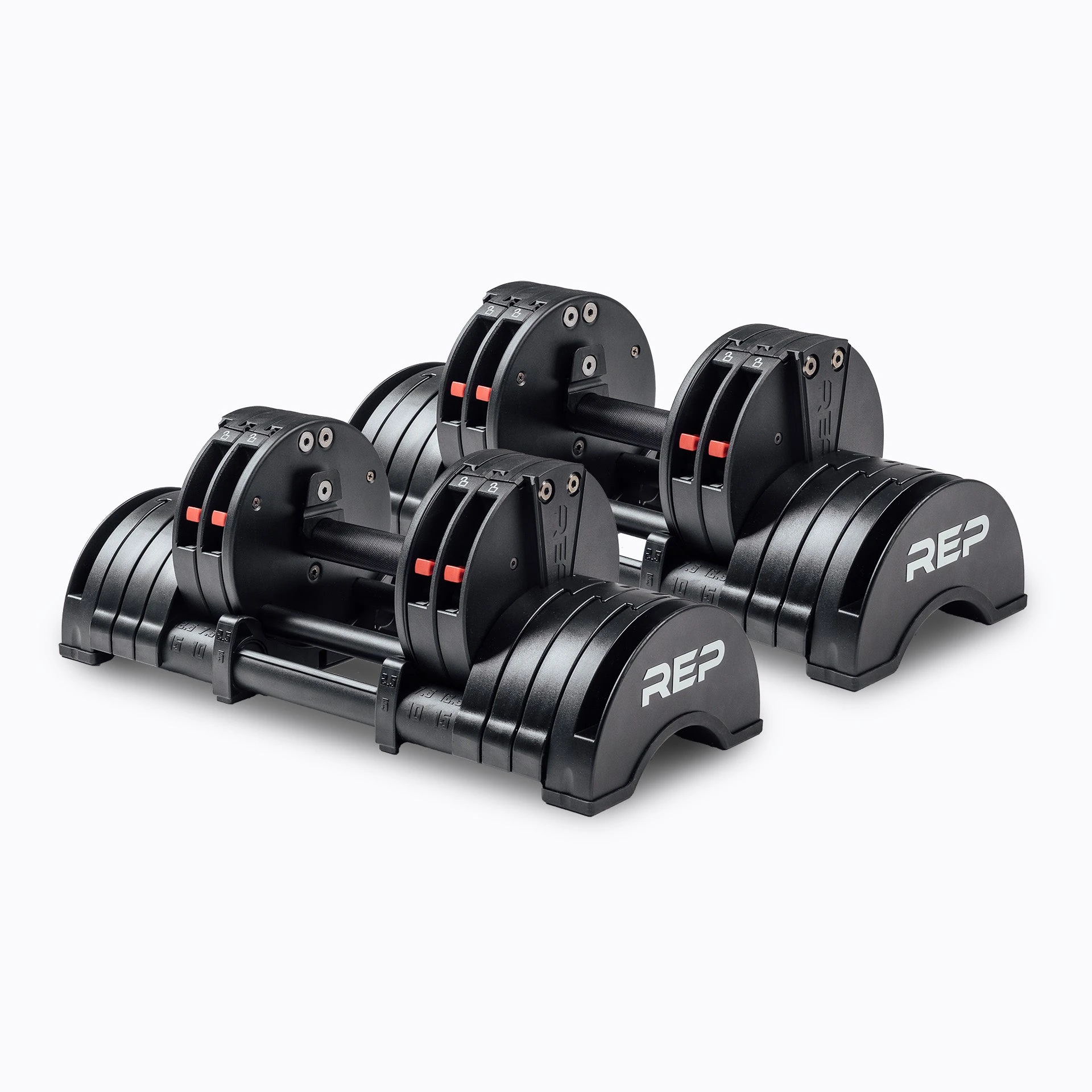
Explore this need in the finder →The 15 kg QuickDraw pair is the lightest metric starting package sold on REP's US product page. It combines a nominal 2.5 kg starting selection with a 15 kg ceiling in each hand and a documented path to larger metric stages. It makes most sense when you organize your training in kilograms and want to begin with a relatively short loaded dumbbell, rather than immediately buying the full 30 kg version.
A metric package with its own plates
This is not the 30-pound package with different labels. REP says the kilogram version adds material inside the plates while retaining the same compact dimensions. Its 15 kg maximum is approximately 33.1 pounds, so it does not line up exactly with either a 30- or 40-pound set. Use its native kilogram settings when planning a routine rather than treating the pound and kilogram ranges as interchangeable.
The 2.5 kg advertised start is about 5.5 pounds. If an exact five-pound light selection is important, compare the 30-pound QuickDraw instead. If your routine already needs 17.5 or 20 kg, the 20 kg configuration is the relevant supplied package. Future expansion is useful, but it is not weight you receive with this pair.
Understand the two kinds of adjustment
The outer plates are secured by steel Lock-N-Load switches. Matching changes at both ends provide the larger 5 kg changes. Two internal 1.25 kg micro plates supply the intervening balanced 2.5 kg steps. You therefore use both visible switches and removable internal weights, rather than a single rotating selector for every setting.
REP allows a single micro plate to make a smaller 1.25 kg addition, but acknowledges a slight imbalance. That is a separate loading preference from wanting matching end loads. A buyer who needs balanced settings should compare the documented 2.5 kg progression. A smaller advertised addition should not be read as a promise that every 1.25 kg number is an equally balanced setting.
Keep the selection process orderly. The official QuickDraw instructions describe locking the plates through the desired selection when increasing weight and checking that the selected and micro weights are secured before use. The pound manual's printed weight values are not a kilogram conversion chart; use the markings and unit-specific information for the actual metric set.
Short when lifted, longer when stored
The 15 kg dumbbell is listed at 12.2 inches long at its supplied maximum. That is the shortest metric stage and can be a useful advantage for lighter movements where extra end length feels unnecessary. The pair still uses 20.6-inch-long cradles, each 8.45 inches wide. Starting with less weight does not reduce the storage tray to the same short length as the loaded dumbbell.
The handle is 32 mm in diameter with nickel-plated steel and volcano-style knurling. Its published length is 5.4 inches without the micro plates and 4.9 inches with them attached. If hand clearance is close, assess the smaller opening you will encounter while using those plates. An open grip offers room around the hand, but it is not unlimited room.
REP lists a loaded cradle height of 7.9 inches and an empty height of 4.7 inches. Allow extra space for lifting and switch access. A stand or cart is optional, so plan a stable position for both trays before deciding where the pair will live.
Choose the starting stage around your present range
This package can grow through the metric add-on system to 20, 25 or 30 kg. The expansion uses additional outer plates and removal of the appropriate cradle spacers. Buy the correct metric components rather than assuming pound plates are equivalent because the dumbbells share dimensions. A gradual purchase makes sense when 15 kg covers your present work and you are uncertain how far you will want to expand.
For someone who already needs the full metric ceiling, the 30 kg pair avoids those intermediate purchases. For someone who wants lighter pound-based selections and a different adjustment feel, compare the Core Home Fitness set. QuickDraw 15 kg fits a metric routine that values its shorter loaded body, low nominal start and later growth. It is less suitable when your current exercises already exceed 15 kg or when separate micro-plate handling would be unwelcome.
Sources: REP US metric product page; metric add-on weights; DB-6500 parts sheet.
Key details at a glance
| Starting load used for comparison | 5.51 lb per hand |
|---|---|
| Included maximum | 33.07 lb per hand |
| Weight change | switch_micro |
| Supplied grip surface | knurled |
| Grip diameter | 32 mm |
| Full-load length | 12.2 in |
| Supported upgrade beyond this package | Yes |
| Supplied configuration | Two 15 kg QuickDraw dumbbells, two cradles and two internal micro plates per dumbbell. Stand/cart and later expansion plates are separate. |
Use the exact model’s instructions for operating limits, supplied equipment and version differences.
Sources for this assessment
- Current exact US QuickDraw KG product and four supplied size variants
- Original QuickDraw DB-6000 user instructions 45-0149-V1, ten PDF pages
- Original pound upgrade instructions 45-0179-V1, eight PDF pages
- DB-6500 version A, 3/14/2024 official three-page spares sheet
- Current exact KG add-on page
- Public manufacturer adjustable-dumbbell support category with original manual links
Put the lightest and heaviest loads together.
Add the adjustment method, an exact selection or a grip requirement when it matters.