
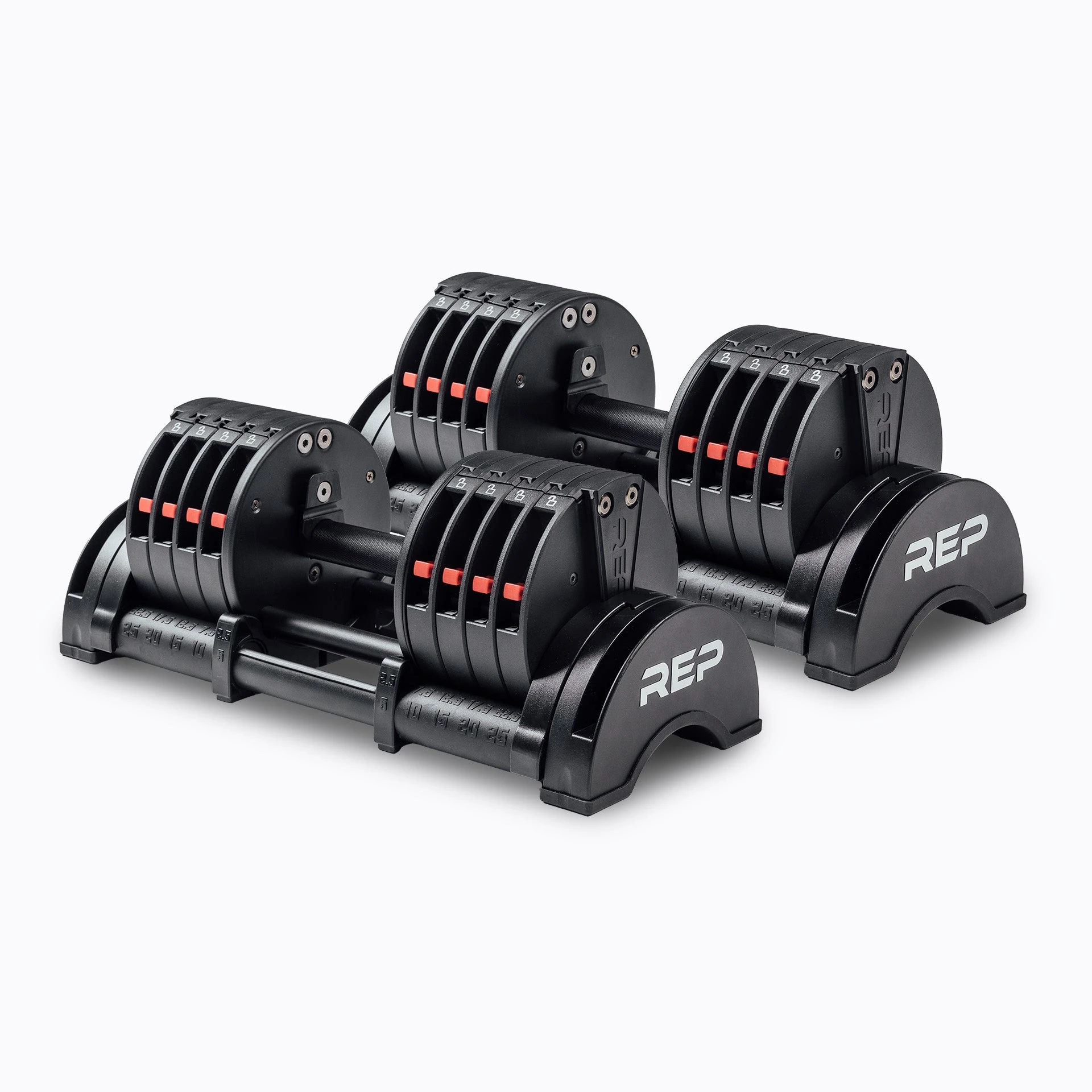
Your needs, this model
Does it fit your priorities?
Can I reach at least fifty-five pounds per hand with an exact native twenty-five-kilogram endpoint?
Yes. The nominal twenty-five-kilogram endpoint is approximately 55.12 pounds.
Explore this need in the finder →Does the supplied package reach 55.5 pounds per hand?
No. Its nominal twenty-five-kilogram endpoint is approximately 55.12 pounds.
Explore this need in the finder →Can I keep equal end loads and a listed full-load length no greater than 16.5 inches?
Yes. The balanced metric plan is documented and this stage’s listed full-load length is 16.4 inches.
Explore this need in the finder →The 25 kg QuickDraw pair is for a metric routine that has outgrown a 20 kg ceiling but does not require the full 30 kg package. It supplies the familiar QuickDraw switch mechanism and low nominal starting selection, with one metric capacity stage still available later. Its main advantage is specific: 25 kg per hand now, in a shorter fully loaded body than the 30 kg version.
Compare kilograms to kilograms first
The advertised range is 2.5 to 25 kg for each dumbbell. At the top, 25 kg is approximately 55.1 pounds. That places it above a 50-pound package but below the 60-pound QuickDraw. The metric plates contain additional internal material, so this is a real weight configuration rather than a unit-label option on the pound set.
Its full-load length is 16.4 inches. The 20 kg pair is listed at 14.3 inches, while the 30 kg pair reaches 18.5 inches. That progression lets you make a concrete choice between supplied capacity and loaded length. Think about your heaviest present exercise, then whether the larger ends would be worthwhile for the additional capacity.
The same reasoning applies at the light end. The advertised 2.5 kg start is roughly 5.5 pounds. It may fit a metric warm-up or lighter movement well, but it should not be counted as an exact five-pound selection in a pound-based routine. Choose the unit family you actually intend to use.
Balanced steps require the paired micro arrangement
QuickDraw's external steel switches lock the outer plates. The larger matched changes are 5 kg, and two internal 1.25 kg plates supply the balanced 2.5 kg progression. This makes the micro plates part of normal weight selection rather than an unrelated accessory. If you change frequently between settings with and without them, factor that handling into your rest periods.
REP permits a single micro plate for a 1.25 kg addition and explicitly notes a slight imbalance. It offers a smaller adjustment for a user who accepts that arrangement. It does not turn the whole system into a uniform, balanced 1.25 kg ladder. A buyer who requires matching end loads should evaluate the balanced 2.5 kg settings.
The controls are visible and the handle remains fixed while you select the outer plates. This can appeal to someone who prefers checking switches over reading a handle-twist selector. Use an orderly setup: make sure the plates through the desired selection are secured, check the internal weights and inspect the components before lifting. REP's manual advises against use when parts are damaged, loose, worn or malfunctioning.
Hand clearance changes with the internal weights
The metal handle measures 32 mm in diameter and uses volcano-style knurling. Published handle length is 5.4 inches without the micro plates, reducing to 4.9 inches with them attached. That smaller measurement is the important fit check for frequent micro-weight use. It also provides a practical comparison with the thicker 36 mm grip on the SNODE AD80.
The trays are longer than the 25 kg loaded dumbbells. Each cradle measures 20.6 inches long and 8.45 inches wide, with a listed seated height of 7.9 inches. Find room for two stable trays, switch access and a clean lift-out path. A floor stand or cart is optional and should be considered separately from the pair itself.
One expansion stage, rather than unlimited growth
The correct metric add-on plates can take this configuration to the family's 30 kg endpoint. The upgrade process uses space retained in the cradle, with corresponding spacers removed. That route is useful if 25 kg covers your current training and you expect a modest later increase. If 27.5 or 30 kg is already essential, buying the 30 kg package directly avoids an immediate upgrade job.
QuickDraw 25 kg is a good fit when its supplied capacity, metric settings and shorter full-load length than the top stage all matter. It is less suitable for someone who wants a capacity well beyond 30 kg or dislikes handling internal micro plates. The right alternative depends on which limitation matters: another QuickDraw stage changes the supplied capacity, while a different mechanism changes the adjustment routine itself.
Sources: REP US product and package information; QuickDraw metric add-ons; metric parts sheet.
Key details at a glance
| Starting load used for comparison | 5.51 lb per hand |
|---|---|
| Included maximum | 55.12 lb per hand |
| Weight change | switch_micro |
| Supplied grip surface | knurled |
| Grip diameter | 32 mm |
| Full-load length | 16.4 in |
| Supported upgrade beyond this package | Yes |
| Supplied configuration | Two 25 kg QuickDraw dumbbells, two cradles and two internal micro plates per dumbbell. Stand/cart and later expansion plates are separate. |
Use the exact model’s instructions for operating limits, supplied equipment and version differences.
Sources for this assessment
- Current exact US QuickDraw KG product and four supplied size variants
- Original QuickDraw DB-6000 user instructions 45-0149-V1, ten PDF pages
- Original pound upgrade instructions 45-0179-V1, eight PDF pages
- DB-6500 version A, 3/14/2024 official three-page spares sheet
- Current exact KG add-on page
- Public manufacturer adjustable-dumbbell support category with original manual links
Put the lightest and heaviest loads together.
Add the adjustment method, an exact selection or a grip requirement when it matters.