
Your needs, this model
Does it fit your priorities?
Can I reach sixty pounds per hand with switches in a documented final-stage package?
Yes. Sixty pounds is the supplied and documented QuickDraw pound endpoint.
Explore this need in the finder →Does this package have a documented higher QuickDraw capacity upgrade?
No. The maker’s named pound endpoint is sixty pounds.
Explore this need in the finder →Is a minimum listed hand opening of five inches confirmed throughout the supplied loading arrangements?
No. The published opening reduces to 4.9 inches with the internal micro plates attached.
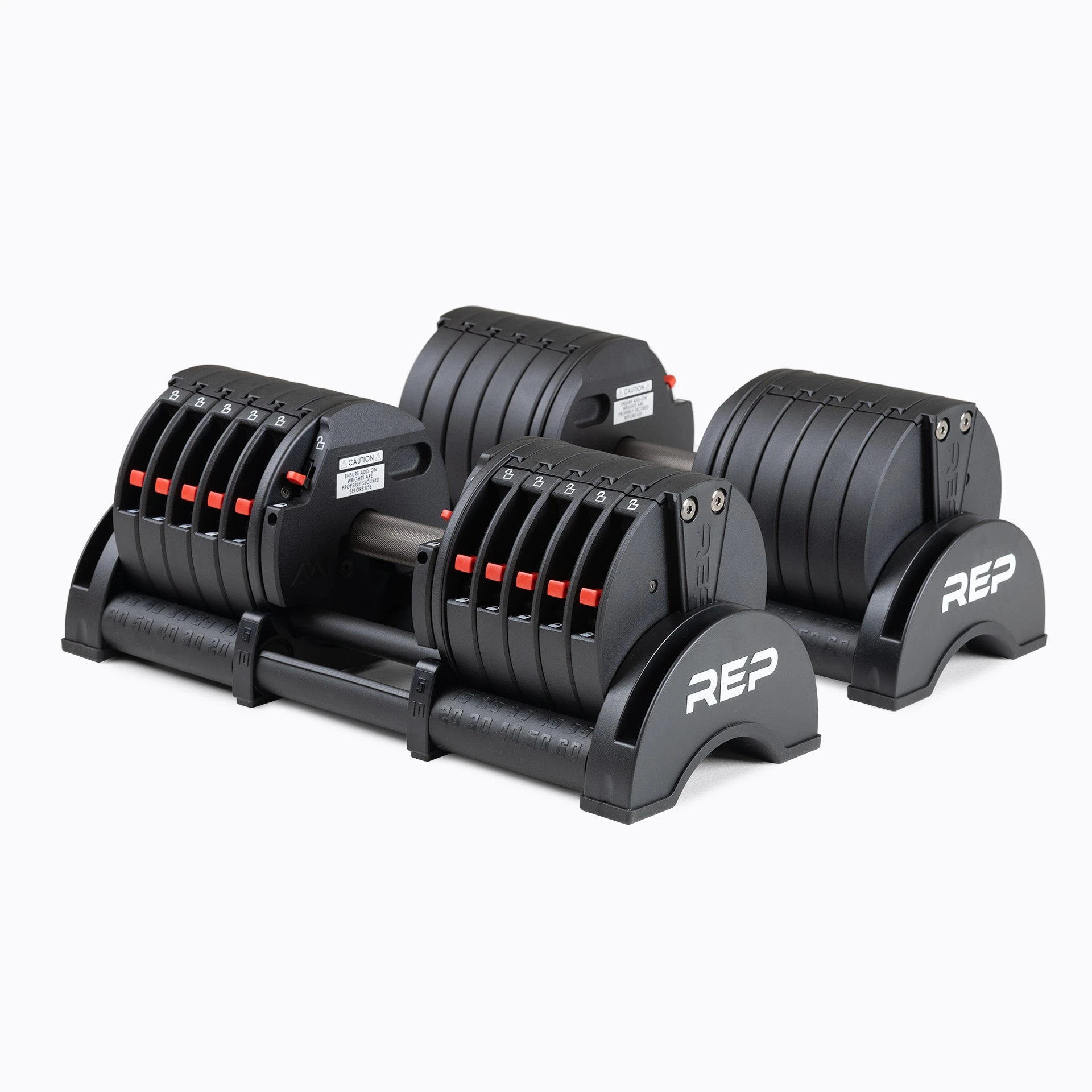
Explore this need in the finder →The 60-pound QuickDraw pair supplies the full documented pound capacity of this family from the start. It is the sensible QuickDraw package when your present routine reaches above 50 pounds, or when you want to avoid buying and fitting the final expansion plates later. It also carries the longest loaded body in the family, so the extra capacity deserves a space and movement check.
The final stage still starts at five pounds
Each dumbbell covers the nominal five- to 60-pound range. Buying the largest package does not eliminate the lighter selections. That gives it a broad role in a shared home setup where different exercises or users need quite different loads. The relevant constraint is the upper end: 60 pounds is the maker's named QuickDraw pound maximum, not an intermediate stop on a path to 80 or 100.
Someone whose routine stays below 40 pounds may prefer the shorter loaded 40-pound configuration. Someone who already needs 70 pounds should instead compare a higher-capacity system, such as the SNODE AD80, while accounting for its ten-pound starting weight and ten-pound internal steps. More maximum weight does not necessarily preserve the light selections you use.
Fast coarse changes, separate micro adjustments
QuickDraw selects outer plates with visible steel switches. Matched plate changes add or remove ten pounds, while the two internal 2.5-pound micro plates create the balanced five-pound progression. This gives a useful range without requiring a separate fixed dumbbell at every weight. It also means you should distinguish a switch-only change from a change that involves taking the micro plates in or out.
The user manual explains that every plate through the desired load must be locked when moving upward. For a quick reduction, unlock the plate just above the desired selection. Before lifting, check the arrangement on both ends and use the appropriate cradle marking row for no micro plates or both micro plates. A repeatable selection routine matters when the tray holds the full complement of plates.
REP permits one micro plate for a smaller addition with a slight imbalance. That option is useful only when you accept that loading arrangement. A requirement for equal end loads points to the five-pound balanced ladder. Do not buy on the assumption that the advertised micro-plate weight guarantees a uniform balanced 2.5-pound ladder across all 60 pounds.
Measure the loaded body and the hand opening
The full-load dumbbell is listed at 18.5 inches long. That can matter when setting up two dumbbells close together, holding one across the body or moving around a bench. It is a concrete tradeoff against the lower stages: the 50-pound pair is listed at 16.4 inches at its supplied maximum. Choose the longer configuration because you need its capacity, rather than assuming the biggest version is universally easier to live with.
Handle diameter is 32 mm. The metal volcano-style knurling and open grip differ from a soft contoured covering or a surrounded selector-frame handle. Published handle length changes from 5.4 inches without the internal micro plates to 4.9 inches with them. Use the latter clearance when assessing frequent micro-weight use, especially if your hands occupy most of the opening.
Each cradle takes 20.6 by 8.45 inches of resting space. The listed loaded cradle height is 7.9 inches, but access needs more room than that static measurement. Plan a stable place for both trays, with clear switch access and a clean lift-out route. A compatible stand or cart is a separate purchase, not part of this pair's capacity specification.
Who should choose the complete pound package?
This version fits someone who wants the QuickDraw switch mechanism and needs up to 60 pounds per hand now. It also avoids the spacer-removal and plate-installation step required when expanding a smaller package. Its weaknesses are the same system choices that make it distinctive: a finite ceiling, a long full-load body and separate handling for some micro-weight changes.
If a different feel matters more, compare the NUOBELL 580 for handle-twist selection and a higher pound ceiling, or a knurled PowerBlock configuration for another expansion approach. Keep the QuickDraw manual's inspection and handling instructions in the decision: secure the selected and micro weights, avoid drops, and stop using damaged, worn or malfunctioning parts. Capacity and durability marketing do not replace those checks.
Sources: REP US QuickDraw product page; official user instructions.
Key details at a glance
| Starting load used for comparison | 5 lb per hand |
|---|---|
| Included maximum | 60 lb per hand |
| Weight change | switch_micro |
| Supplied grip surface | knurled |
| Grip diameter | 32 mm |
| Full-load length | 18.5 in |
| Supported upgrade beyond this package | No |
| Supplied configuration | Two 60 lb QuickDraw dumbbells, two cradles and two internal micro plates per dumbbell. Stand/cart and later expansion plates are separate. |
Use the exact model’s instructions for operating limits, supplied equipment and version differences.
Sources for this assessment
- Current exact US QuickDraw LB product and four supplied size variants
- Original QuickDraw DB-6000 user instructions 45-0149-V1, ten PDF pages
- Original pound upgrade instructions 45-0179-V1, eight PDF pages
- DB-6000 version B, 11/2/2023 official three-page spares sheet
- Current exact LB add-on page
- Public manufacturer adjustable-dumbbell support category with original manual links
Put the lightest and heaviest loads together.
Add the adjustment method, an exact selection or a grip requirement when it matters.