
Your needs, this model
Does it fit your priorities?
Can I require a soft grip, eighty pounds per hand and a later supported upgrade?
Yes. The supplied TPR pair reaches eighty pounds and retains the final Stage 4 route.
Explore this need in the finder →Does this package meet a one-hundred-pound-per-hand requirement now?
No. Stage 4 is not included in the eighty-pound configuration.
Explore this need in the finder →Can I require a knurled metal handle?
No. This specific package supplies the cushioned TPR handle.
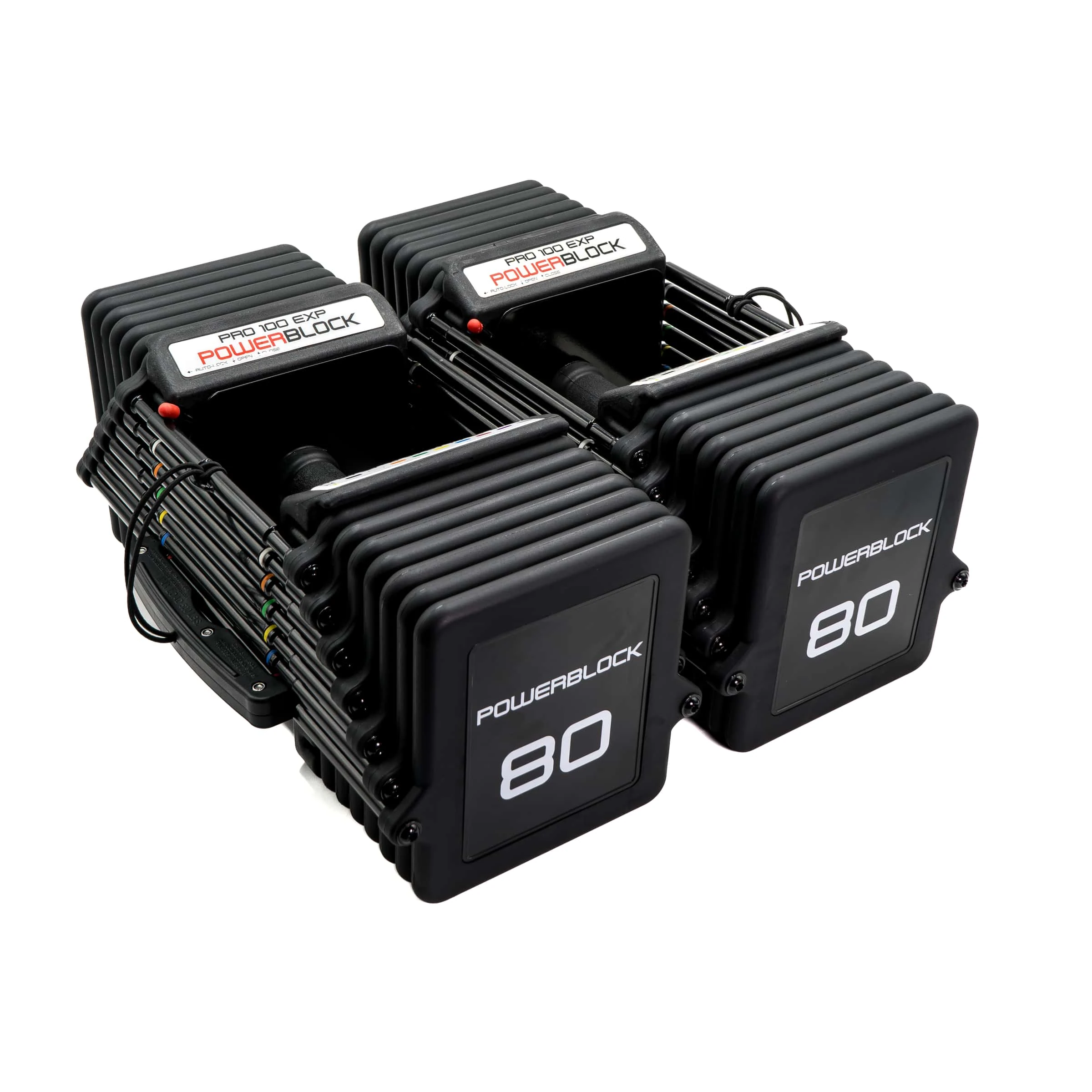
Explore this need in the finder →The eighty-pound TPR Pro 100 EXP package combines three supplied weight stages with PowerBlock's cushioned grip option. It is a useful configuration when your present requirement is beyond sixty pounds but the final hundred-pound stage can wait. The softer handle does not change the plate ladder or remove the selector checks described in the owner's manual.
Know which eighty-pound pair is being assessed
The official US page has a specific TPR / 80 LBS purchase choice, sold as a pair. Its contents are the Stage 1 set with Stage 2 and Stage 3 expansions. The manual describes those steps as forty, sixty and eighty pounds per hand. Stage 4 remains an additional purchase if one hundred pounds becomes necessary.
The minimum is five pounds with both included 2.5-pound micro weights removed from the handle. One installed micro weight produces 7.5 pounds; both give ten. Above the handle settings, the published selections use the plate nest and micro weights together. At the heavier end of this package they include sixty-five, 67.5, seventy, seventy-five, 77.5 and eighty pounds. A five-pound gap from seventy to seventy-five remains, even though smaller changes are available elsewhere.
TPR is a surface preference, not another capacity system
The maker describes TPR as cushioned and less abrasive than its knurled alternative. It can appeal if you prefer a softer hand contact during repeated sets. The supplied weight stages and selection ladder are unchanged. Ask for the exact TPR grip diameter and length if those measurements are essential; the published numeric specification accompanies the knurled-metal version.
Someone used to a conventional open dumbbell should also consider the surrounding rails and the need to lift from the central grip. Even at a lighter selected load, returning the assembly correctly remains part of the exercise station. A comfortable surface cannot resolve a cramped placement or an inconvenient access angle.
Main selection and micro loading are different jobs
The tethered magnetic selector chooses plates. To make a handle-weight change, remove the handle and use its Auto Lock control to add or remove micro weights. Keep the handle oriented as directed and close the lock before use. This division makes it worth comparing your actual sequence of loads, especially when a small numerical change means an extra handle operation.
The eighty-pound knurled version offers the same supplied stages with a different grip. The Elite USA 90 is another relevant comparison if a knurled grip and a different family ceiling are acceptable. Neither model should be treated as interchangeable when ordering expansion plates or attachments.
One final stage remains
The official Stage 4 kit raises this eighty-pound system to one hundred pounds per dumbbell. It installs after the earlier stages, and the manual limits these kits to the Pro 100 EXP family. If you are already planning to select a load above eighty pounds, the complete hundred-pound TPR package provides the required parts from the start.
If sixty pounds is sufficient, the sixty-pound TPR pair retains the same staged route. This eighty-pound choice is most persuasive when the additional supplied stage does current work. Future compatibility is useful information, but it is not extra weight sitting inside the box.
Installation space is working space
Leave access beside the nest for the selector and above it for a straight lift and the manual's engagement check. Twisting the handle sideways during removal can jam the assembly. The precise dimensions of the eighty-pound TPR configuration remain unconfirmed here; a published full hundred-pound measurement should not silently become its footprint.
Inspect the pin, magnetic contacts, attached tether and hardware before use. Do not use a damaged or jammed assembly, drop the dumbbells, or knock them together. Follow the gentle cleaning instructions rather than spraying or soaking the mechanism. This configuration fits an eighty-pound current requirement and a conscious TPR preference, with the final capacity stage left optional. It is less suitable for someone who needs a complete 2.5-pound ladder, exact confirmed TPR grip dimensions, or equipment intended for repeated impacts.
Key details at a glance
| Starting load used for comparison | 5 lb per hand |
|---|---|
| Included maximum | 80 lb per hand |
| Weight change | selector_micro |
| Supplied grip surface | soft |
| Supported upgrade beyond this package | Yes |
| Supplied configuration | TPR pair with Stage 2 and Stage 3 expansions plus two 2.5 lb internal micro weights per handle. |
Use the exact model’s instructions for operating limits, supplied equipment and version differences.
Sources for this assessment
Put the lightest and heaviest loads together.
Add the adjustment method, an exact selection or a grip requirement when it matters.