
Your needs, this model
Does it fit your priorities?
Can I require sixty pounds per hand with a soft grip?
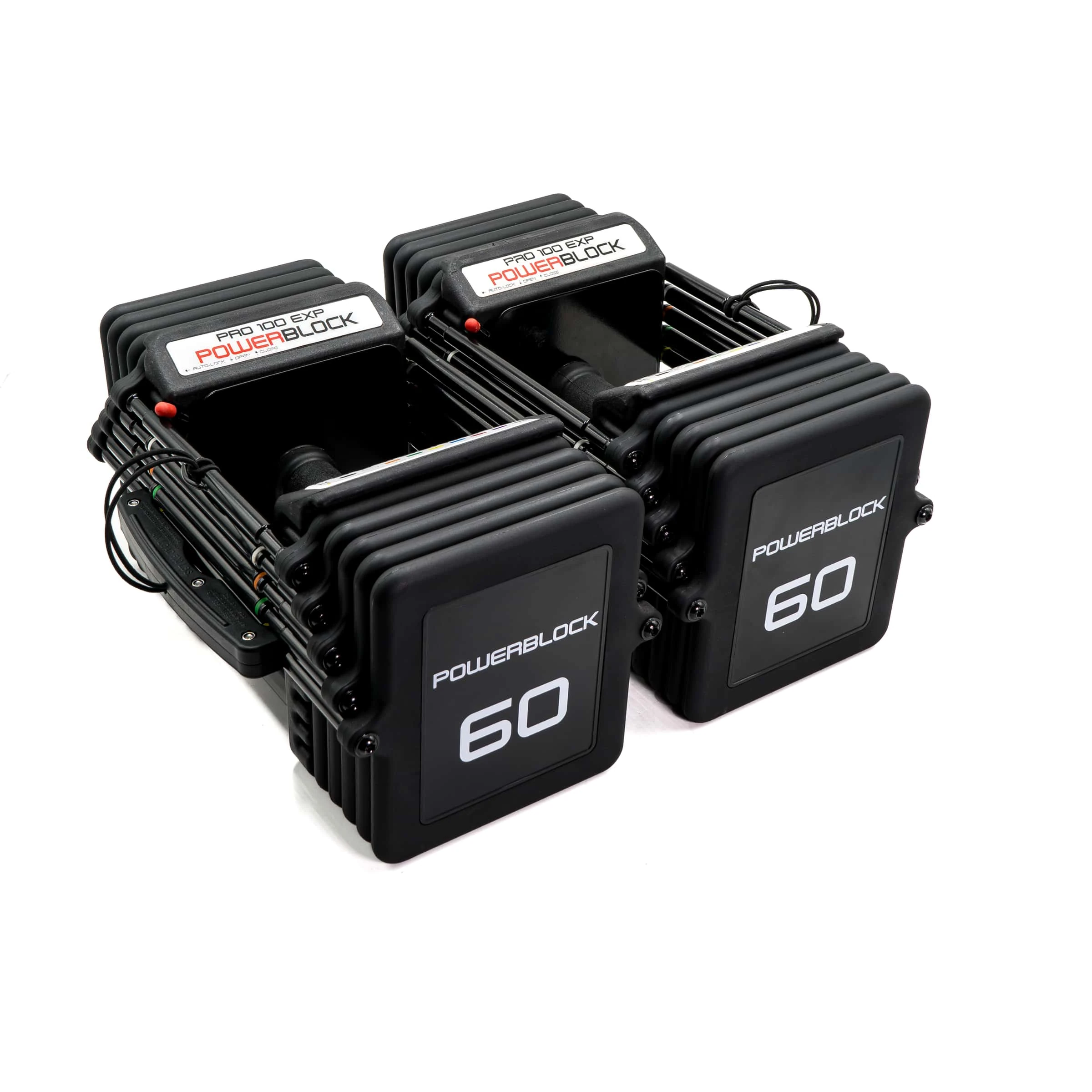
Yes. This TPR configuration supplies Stage 2 for a sixty-pound maximum per dumbbell.
Explore this need in the finder →Can I require eighty pounds per hand without another purchase?
No. Stage 3 is required for eighty pounds and is not supplied in this version.
Explore this need in the finder →Can I require neighboring weight selections to be no more than 2.5 pounds apart?
No. Five-pound gaps remain in the documented ladder, even though micro weights are included.
Explore this need in the finder →The sixty-pound TPR Pro 100 EXP pair is a practical step beyond starter weights for someone who prefers a cushioned handle. It includes the Stage 2 expansion rather than leaving that first upgrade for another purchase. Its limits are equally specific: sixty pounds is the supplied maximum, the ladder has some five-pound gaps, and changing a micro weight requires a separate handle operation.
The package and its usable loads
The current official US selector offers TPR / 60 LBS as a pair. The Pro 100 EXP manual establishes forty pounds as Stage 1 and sixty pounds after adding Stage 2. The sixty-pound retail package includes that first expansion. It does not include the Stage 3 and Stage 4 plates needed to reach eighty and one hundred pounds per dumbbell.
At light settings, remove both included micro weights for a five-pound handle, use one for 7.5 pounds or both for ten. Plate selections above that include half steps such as 17.5 and 27.5 pounds, but also gaps such as ten to fifteen and fifty to fifty-five. In particular, the existence of 2.5-pound micro weights does not establish a selectable 52.5-pound assembly.
Soft contact and grip fit
PowerBlock describes the TPR grip as cushioned and less abrasive than the knurled version. Check that surface against your usual grip preference. The current page gives numeric grip dimensions alongside the knurled stainless steel specification; exact TPR dimensions remain unconfirmed, so ask about the supplied handle if diameter or opening is essential.
That distinction matters when comparing a pair for two household users. Both people may accept the same maximum weight but have different handle preferences. A shared pair also means sharing its micro-weight settings and returning the handle correctly between users. It is worth thinking through that handoff, rather than assuming one quick pin change answers every adjustment task.
Weight changes are visible, but require attention
The magnetic pin engages the appropriate rails in the nested stack. Its magnets and tether are functional parts of the system, not packing accessories. The owner's manual requires correct full engagement and warns against cross-pinning. Changing the handle's internal micro weights additionally requires operating the Auto Lock lever with the handle positioned as instructed, then closing it before use.
For steady sets at a few main loads, that routine can be easy to plan. A session that constantly moves between full and partially unloaded handles needs more handling. The non-expandable Pro 50 is worth comparing for its different ladder if fifty pounds is enough. The sixty-pound knurled package is the direct alternative when texture is the deciding factor.
How this stage grows
Adding the Pro 100 EXP Stage 3 kit raises the maximum from sixty to eighty pounds per hand. Stage 4 then reaches one hundred. The instructions require sequential installation and do not permit these expansion kits on other PowerBlock models. Dedicated Pro 100 barbell and kettlebell attachments also exist, but they are separate equipment purchases and should not be confused with included dumbbell capacity.
The eighty-pound TPR pair is more relevant if your routine already exceeds sixty. The forty-pound starting pair is enough only when that lower present ceiling works. Buying an expandable family is not a reason to ignore what your actual package supplies on delivery.
Allow room for the selection routine
Use a stable location with access to the selector, room above the nest and a clear straight return path. The manufacturer warns against turning the handle sideways while extracting it. Confirm the sixty-pound stage's footprint before choosing a narrow shelf; the published hundred-pound measurements describe a larger nest. An optional stand also needs its own compatible specification and floor space.
Inspect the equipment before use, keep the tether attached, and stop using damaged or jammed parts. Gentle cleaning and the manual's maintenance schedule apply to the grip and selector system. Dropping and striking the dumbbells together are prohibited. This pair suits a home user who needs sixty pounds now, prefers TPR and accepts staged expansion and a nonuniform ladder; it is not a commercial-use or impact-tolerance promise.
Key details at a glance
| Starting load used for comparison | 5 lb per hand |
|---|---|
| Included maximum | 60 lb per hand |
| Weight change | selector_micro |
| Supplied grip surface | soft |
| Supported upgrade beyond this package | Yes |
| Supplied configuration | TPR pair includes the starting set, Stage 2 and two 2.5 lb micro weights per handle. |
Use the exact model’s instructions for operating limits, supplied equipment and version differences.
Sources for this assessment
Put the lightest and heaviest loads together.
Add the adjustment method, an exact selection or a grip requirement when it matters.